By: Jason Dodge
The start of a new year brings a steady flow of marketing predictions. This isn’t one of them.
Predictions are easy. They also add to the already noisy space of safe bets and wishful thinking that rarely survives contact with reality. What’s more valuable is an outlook on where brands should be focusing their digital investments, and what a proactive approach to search and visibility actually looks like in 2026.
In our research and conversations with other practitioners we respect in our industry, what emerged wasn’t a list of trends, but a clearer picture for times ahead in the digital landscape as it continues to evolve. Signal in a sea of noise.
TL:DR
Success of your digital marketing efforts in 2026 is not going to come from chasing algorithms and updates. It’s going to involve a more intimate understanding of your infrastructure, breaking down the purpose each channel brings to your audiences and marketing mix, and accepting that we’re now optimizing for multiple systems simultaneously.
Technical SEO Isn’t Optional Anymore.
The “technical SEO is a one-time audit” mentality is dead. It was already on life support, but the rise of LLMs and generative search has finished it off.
Technical SEO work is more important today than it’s ever been. That’s how Nick LeRoy, SEO consultant and founder of SEOjobs.com, put it. Not just for traditional search crawling, but for understanding how LLMs consume your site. Most LLMs, with the exception of Gemini, struggle to render JavaScript. That’s a blind spot many brands haven’t even considered. Meanwhile, server logs, once the domain of enterprise sites that were worried about crawl budgets, are becoming essential for understanding how AI systems interact with your content.
Adding to that, Sam Torres at Pipedrive called logfile analysis “some of the only grounded data we have” when it comes to understanding what LLM platforms actually care about. She also made a point that stuck with us: technical SEO is evolving into a product management function. It’s no longer just about fixing issues. It’s about making the business case, setting expectations, testing hypotheses and communicating across teams to get wins implemented.
This is a shared sentiment that aligns with something we see constantly in our work. You cannot be advanced if you don’t do the basics. Many brands had skipped over the foundational aspects of SEO during the content-volume era, which led them down the path of chasing traffic without considering the fragmentation of their own brand across inbound channels. That’s now become a liability for many brands.
Major LLMs like OpenAI’s ChatGPT will scrape and utilize your meta page descriptions verbatim. While not a traditional search ranking signal, it’s hard to look past that and if you’re not focusing any attention on these basic elements, or worse, trusting another AI tool to write them without oversight, you’re handing off your brand’s first impression to a system that doesn’t understand your business. The integrity of the work matters for brands that want to stand out.
You’re Optimizing for Machines AND People Now
For years, the industry mantra has been “create content for humans, not algorithms.” It’s good advice. It’s also incomplete.
Being entirely human-centric and audience-first isn’t enough. That’s the reframe Rand Fishkin, cofounder of SparkToro, offered. Zero-click marketing means algorithms rule attention. Brands that do great things for their audiences and customers don’t necessarily serve Meta, Google, TikTok, LinkedIn, OpenAI and Reddit’s interests. But if you want visibility, you have to do that too.
That means understanding how each platform’s systems work and (unfortunately) playing by their rules, some intentional, some not. You’re optimizing for machines AND people, not one or the other.
Sam Torres added another layer: entity analysis. How is your brand understood across different LLM models? How are your products and services being interpreted? Running analyses on these questions, across LLMs and offsite sources like Reddit and YouTube, should absolutely influence content strategies. It might even influence product roadmaps.
Erin Simmons, managing director at Women in Tech SEO, offered a unique perspective that ties this together nicely. Search may begin with AI, but decisions happen between people. Trust isn’t built between a person and a brand. It’s built in communities, conversations and human spaces where people help each other make sense of the world. There’s a growing credibility and trust gap in search that’s pushing audiences toward these human-forward spaces.
That insight reframes where your brand visibility actually comes from. When you earn trust, people make you visible. They reference you in conversations, recommend you in threads and surface you in the exact places AI and search engines now look for signals. Visibility is the byproduct of trust.
This only increases the problem with noise on the Internet. Search engines are combating more junk than they’ve ever faced. Being understood correctly by the systems, not just by humans, is part of earning trust. And that requires making sure your brand is telling a consistent story across all channels, including the community spaces where trust is actually exchanged.
It also requires understanding the purpose each channel serves in your marketing mix. Just because Google delivered a lot of “traffic” before doesn’t mean it led to real brand engagement or leads. If a channel is attracting attention from people who are learning from your brand but will never transact business with you, what’s it actually doing for you? That’s a question worth asking before doubling down on volume.
Measurement Has to Evolve (And It Can)
On the subject of measuring the effectiveness of your marketing efforts, we asked that question of Dana DiTomaso, principle and founder of Kick Point. More specifically, the ask was if we’re at a point where attribution becomes easier?
Fielding a laughable response, the short answer is no, attribution isn’t getting easier. But that doesn’t mean you can’t prove value for the work that’s being performed. It’s going to be important that digital marketers become more knowledgeable about the data they have access to and how it’s being segmented out. Dana has built a compelling framework that we’ve employed at BlackTruck to assist us in tracking AI overview traffic inside of GA4, allowing us to compare its performance against regular organic search traffic.
While there will be mixed results based on the brand and type of site being managed, overall there are indications that AIO visitors convert at higher rates, have longer season durations and are significantly more likely to return because they’ve been pre-qualified by the AI before they ever clicked through.
Start spotting the signals and use them to your advantage. Tracking impressions or showing up in AI overviews is interesting. Showing that those visitors are actually engaging with your brand or converting is more useful.
AIO conversion rates will vary by industry. Dana’s data is compelling, but it won’t apply universally. The point isn’t to assume her numbers are your numbers. The point is if you’re not parsing that traffic out now, you’ll never know what your numbers are in the future.
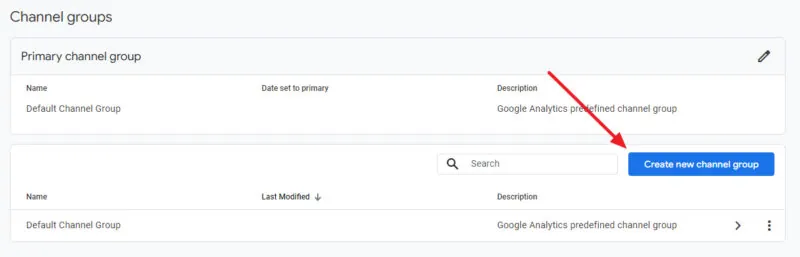
Source: Analytics Playbook
Ray Grieselhuber, CEO of DemandSphere, brought up Share of Voice as an actionable metric, but with a caveat. It requires expertise to interpret and apply correctly. The data problem in AI search is also an actionability problem, and each industry has nuances that affect how you answer the question of success.
Sam Torres made a point about “educating up” being a real skill. Helping leadership understand what metrics actually matter, even as the goalposts shift. That’s not a one-time conversation. It’s ongoing.
We’re at a point where a CMO doesn’t need perfect attribution. They need confidence that investments are working. Leaning into the trends and directional data rather than demanding absolutes, will keep everyone at the table.
The Role of SEO Is Ever-Expanding
If you’re still thinking of SEO as a single-channel discipline, you’re likely under-resourcing it or hiring for the wrong skills and needs of your organization.
The most effective SEO practitioners today aren’t just optimizing pages. They’re functioning as cross-functional strategists who can connect technical infrastructure, content, paid media and business outcomes. We agree with Ray Grieselhuber on the point that these team members have always been undervalued. Good technical SEO teams can talk user behavior in one conversation, and build workflows or software tools in the next. The SEO industry is one of predictions and reactions, forcing adaptation to happen every 12 to 18 months as each platform evolves. That kind of cognitive flexibility is rare, and it’s exactly what brands should be paying attention to as AI reshapes how customers discover you.
Your SEO and paid teams shouldn’t be siloed. Darren Shaw at Whitespark put it bluntly: “Clients don’t hire us for rankings. They hire us for leads.” Organic lead volume from local search is declining as Google monetizes more of the results page. Brands that treat organic and paid as separate line items are leaving performance on the table. When both levers work together, you can actually deliver on the promise of lead generation from search.
Your SEO team needs a seat in adjacent conversations. Sam Torres listed the partnerships that now affect search performance: cybersecurity (privacy and compliance decisions have SEO implications), UX and CRO (converting the traffic you’re getting) and product teams (entity clarity affects how AI systems understand your offerings) and public relations (where SEO and PR alignment can amplify visibility and authority). If your SEO resource is only talking to your content team, you’re missing integration points that affect revenue.
Content volume is the wrong KPI for established brands. Sam also made the case that content refreshes often have better ROI than net-new content. If your team is being measured on output rather than performance, you’re incentivizing the wrong behavior.
The SEO teams who can connect the technical infrastructure, content strategy, and business outcomes, are the ones you want running the play, not just executing a channel.
If that’s not how your current team operates, it might be time to revisit how the function is structured and deployed within.
What Does This Mean for Your Brand?
If you’re a marketing leader trying to figure out where SEO fits in 2026, here’s how to think about it:
Invest in technical depth. Not as a one-time fix, but as ongoing infrastructure. The brands that skipped the basics are now scrambling to catch up while also adapting to new systems.
Rethink your content strategy. Prioritize entity clarity and content refreshes over volume. The question isn’t how much content you’re producing. It’s whether your brand is being understood correctly across the systems that matter.
Break down channel purpose. Understand what each channel is actually doing for you. Traffic isn’t value. Engagement, trust and conversion are.
Demand better measurement. Not perfect attribution, but directional proof of value. If your team can’t show you what’s working and why, that’s a problem worth solving.
Hire for adaptability. The best SEO professionals are already operating as strategists, not just tacticians. Seek the input of those whose experience shows they can handle complexity and ambiguity, and who demonstrate the ability to grow as new opportunities emerge.
The value of search in 2026 is the same as it’s always been. Connecting the right people with the right information at the right time. What’s changed is the number of systems you have to navigate to make that happen.
If your current approach isn’t accounting for that, now is the time to revisit it. We should connect and discuss.
Additional Resources
[listen] Search, Beyond Google – Are Consumers Adapting to Generative AI Search?
[listen] AI Optimization: Separating Hype from Reality on The Redirect Podcast
[read] Digital PR + SEO: A Match Made For Modern Marketing
[read] Fixing Measurement to Unlock Revenue Growth